

How to optimize the design of an extruded aluminum heatsink?
As a seasoned supplier of extruded aluminum heatsinks, I've witnessed firsthand the critical role these components play in various industries, from electronics to automotive. The optimization of an extruded aluminum heatsink's design is not just about enhancing performance; it's about meeting the ever - evolving demands of modern technology. In this blog, I'll share insights on how to optimize the design of an extruded aluminum heatsink, drawing on my years of experience in the field.
Understanding the Basics of Extruded Aluminum Heatsinks
Before delving into optimization, it's essential to understand the fundamentals of extruded aluminum heatsinks. Extrusion is a manufacturing process where aluminum alloy is forced through a die to create a specific cross - sectional shape. This process allows for the production of heatsinks with complex and efficient geometries. Aluminum is the material of choice for heatsinks due to its excellent thermal conductivity, lightweight nature, and corrosion resistance.
One of the primary functions of a heatsink is to transfer heat away from a heat source, such as a microprocessor or a power transistor. The efficiency of this heat transfer is measured by a property known as thermal resistance. Lower thermal resistance means better heat transfer capabilities.
Factors Affecting the Design of Extruded Aluminum Heatsinks
Fin Design
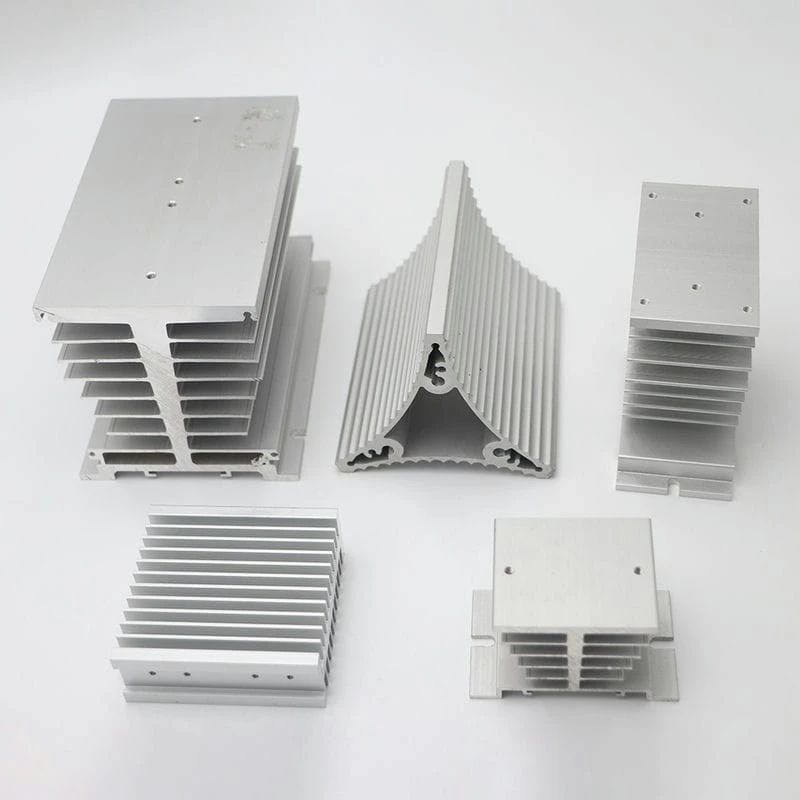
Fins are the most prominent feature on a heatsink, and their design significantly impacts the heatsink's performance. The number, height, thickness, and spacing of fins all play a role in heat dissipation.
Increasing the number of fins can increase the surface area available for heat transfer. However, there is a limit to this approach. If the fins are too closely spaced, it can impede air flow, reducing the overall heat transfer efficiency. A good rule of thumb is to maintain an appropriate fin pitch (the distance between adjacent fins).
The height of the fins also affects performance. Taller fins generally provide more surface area for heat transfer. But taller fins can also be more susceptible to bending and may increase the overall size and weight of the heatsink.
The thickness of the fins is another crucial factor. Thicker fins can conduct heat more effectively from the base to the tip, but they also reduce the number of fins that can be placed on the heatsink, thus reducing the total surface area.
Base Design
The base of the heatsink is in direct contact with the heat source. Its design and quality are vital for efficient heat transfer. A flat and smooth base ensures maximum contact with the heat source, minimizing the thermal resistance at the interface.
The thickness of the base also matters. A thicker base can spread the heat more evenly across the heatsink, but it adds weight and cost. Therefore, a balance must be struck between base thickness and performance requirements.

Material Selection
As mentioned earlier, aluminum is the most commonly used material for heatsinks. However, different aluminum alloys have different thermal conductivities and mechanical properties. For example, 6063 aluminum alloy is popular for its good extrudability and moderate thermal conductivity. On the other hand, 1050 aluminum alloy has higher thermal conductivity but is less strong and more difficult to extrude.
The choice of alloy depends on the specific application requirements, such as the heat load, mechanical strength, and cost.
Optimization Strategies
Computational Fluid Dynamics (CFD) Analysis
CFD analysis is a powerful tool for optimizing the design of extruded aluminum heatsinks. It allows engineers to simulate the flow of air around the heatsink and predict the heat transfer performance. By using CFD, we can test different fin geometries, air flow rates, and other design parameters without having to build physical prototypes.
For example, we can use CFD to determine the optimal fin pitch and height for a given air flow condition. We can also identify potential areas of poor air circulation and modify the design accordingly.
Geometric Optimization
Taking advantage of advanced extrusion techniques, we can create more complex and efficient geometries. For instance, we can design fins with a tapered shape. Tapered fins can improve air flow by reducing the pressure drop across the heatsink.
Another geometric optimization is the use of micro - fins. Micro - fins can significantly increase the surface area of the heatsink without substantially increasing its size. They are particularly effective in applications where space is limited.
Surface Treatment
Surface treatment can enhance the heat transfer performance of an extruded aluminum heatsink. Anodizing, for example, can increase the emissivity of the aluminum surface, allowing it to radiate heat more effectively. Powder coating can also improve the appearance and corrosion resistance of the heatsink.
Industry - Specific Considerations
Electronics
In the electronics industry, where space is often at a premium, minimizing the size of the heatsink while maintaining high performance is crucial. Designers need to focus on optimizing the fin density and using compact geometries. Additionally, with the increasing power density of electronic components, the heatsink must be able to handle higher heat loads.
Check out our Aluminium Heatsink Led products, which are specifically designed to meet the requirements of LED lighting systems. These heatsinks are optimized for efficient heat dissipation in a compact form factor.
Automotive
In the automotive industry, heatsinks are used in various applications, such as power electronics for electric vehicles. The harsh operating environment, including high temperatures, vibrations, and exposure to moisture, requires heatsinks with high mechanical strength and corrosion resistance.
Our Aluminum Heat Sink Extrusion products are well - suited for automotive applications. They are made from high - quality aluminum alloys and undergo rigorous testing to ensure reliable performance in challenging conditions.
Industrial
Industrial applications often involve large - scale power electronics and high - power machinery. Heatsinks in these applications need to be able to dissipate large amounts of heat. This may require larger heatsinks with high - performance fin designs and efficient base structures.
Our Heat Sink Aluminium Extrusion solutions are designed to meet the demanding requirements of industrial applications. They offer superior heat transfer capabilities and long - term reliability.
Conclusion
Optimizing the design of an extruded aluminum heatsink is a multi - faceted process that involves considering various factors, from fin and base design to material selection and surface treatment. By using advanced tools like CFD analysis and taking into account industry - specific requirements, we can create heatsinks that offer superior performance and reliability.
If you're in the market for high - quality extruded aluminum heatsinks or have specific design requirements, I encourage you to reach out. Our team of experts is ready to work with you to optimize the design and find the best solution for your application. Whether it's for a small - scale electronics project or a large - scale industrial application, we have the knowledge and experience to meet your needs. Contact us today to start the procurement discussion and take your project to the next level.
References
- Incropera, F. P., DeWitt, D. P., Bergman, T. L., & Lavine, A. S. (2007). Fundamentals of Heat and Mass Transfer. Wiley.
- ASM Handbook Committee. (2006). ASM Handbook Volume 2: Properties and Selection: Nonferrous Alloys and Special - Purpose Materials. ASM International.