


Aluminum Profile Manufacturing Process
Aluminum profiles undergo hot extrusion and precision machining, followed by surface treatment—either anodizing or powder coating—to achieve the desired shape, precision, and a corrosion-resistant, colored finish.

Aluminum Profile Forming
The aluminum rod passes through a precisely designed die cavity to form the desired external profile—such as grooves, ribs, or circular holes. It then immediately undergoes air cooling or water-mist quenching to stabilize its internal grain structure and enhance its strength.

Machining Process
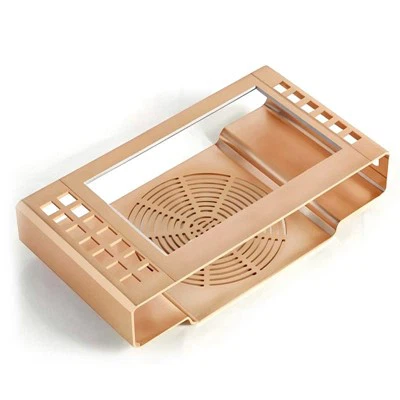
In accordance with blueprint specifications, processes such as sawing, stamping, and CNC machining are employed to impart the final dimensions and assembly characteristics to the profiles. Typically, precision tolerances of ±0.02 can be achieved.

Surface Treatment
Surface treatment primarily aims to enhance the corrosion resistance, wear resistance, and visual appeal of aluminum profiles. The key processes include anodizing and powder coating, and colors can be tailored to specific client specifications.

One-stop Aluminum Profile Manufacturing in China
we combine extrusion, CNC machining, and surface treatment (anodizing/powder coating) to deliver fully finished, ready-to-use profiles with customized colors and precise dimensions.
Physical Property Advantages Based on Industry-Specific Failure Modes (IATF 16949 / ISO 9001:2015)
The key advantages of extruded aluminum lie in its structural modularity and the distinct mechanical properties offered by various aluminum alloy grades. R&D engineers align the physical attributes of these aluminum alloys with specific die designs to effectively address critical failure mode pain points across diverse industries.
| Alloy Grade | Yield Strength (MPa) | Thermal Conductivity (W/m·K) | Primary Structural Advantage | B2B Application Field |
| AL6063-T5 | 145 | 201 | High thermal mass, supports fin-to-base aspect ratios of 15:1 | LED Heat Sinks, 5G Server Cold Plates |
| AL6061-T6 | 276 | 167 | High impact resistance, controlled kinetic energy absorption | EV Battery Housings, Crash Management Systems |
| AL7075-T6 | 503 | 130 | Maximum tensile strength, exceptional non-magnetic rigidity | Robotic Actuator Frames, Aerospace Mounts |
Microstructural Integrity and Profile Cross-Sectional Geometric Constraints
The physical geometry of an extruded profile directly determines its mechanical load-bearing capacity and manufacturability. During the continuous extrusion phase, material flow dynamics—governed by precise die constraints—are critical for preventing dimensional defects and mitigating internal shear stresses.
To maximize the structural advantages of the extruded part without risking fracture of the H13 tool steel die, design engineers strictly enforce the following geometric parameters:
Physical Wall Thickness Thresholds:The nominal thickness of solid profiles is maintained at >0.8 mm, while multi-chamber hollow profiles must exceed >1.2 mm to withstand the resistance encountered during extrusion.
Tongue Ratios: Strictly controlled at < 3:1 to prevent cantilevered die sections from fracturing under pure physical shear loads.
Draft Angles and Fillets: Vertical ribs incorporate a draft angle of 0.5° to 1.5° to facilitate release from the die. All internal sharp corners feature transition fillets with a minimum radius of R0.5 mm to effectively dissipate localized stress concentrations during the 175°C artificial aging and rapid quenching stages.

Characterized by low density, superior mechanical properties, corrosion resistance, and ease of processing, Our aluminum profiles are widely utilized in the following fields:
Industrial Automation: Used to fabricate assembly line workstations, equipment safety guards, robotic frames, conveyor belt supports, and cleanroom frameworks. Their modular design facilitates rapid assembly and adjustment.
Architecture and Decoration: Employed as frames for doors and windows, curtain wall substructures, sunroom frameworks, stair railings, partitions, and suspended ceilings. When treated with surface anodizing or powder coating, they offer both aesthetic appeal and weather resistance.
Transportation:Applied in the structural skeletons of high-speed train carriages, automotive crash beams, battery trays, container frames, and ship gangways, contributing to vehicle lightweighting and energy efficiency.
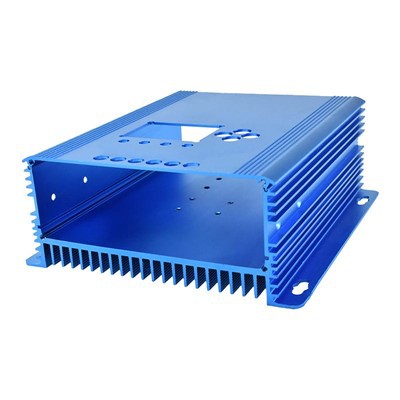
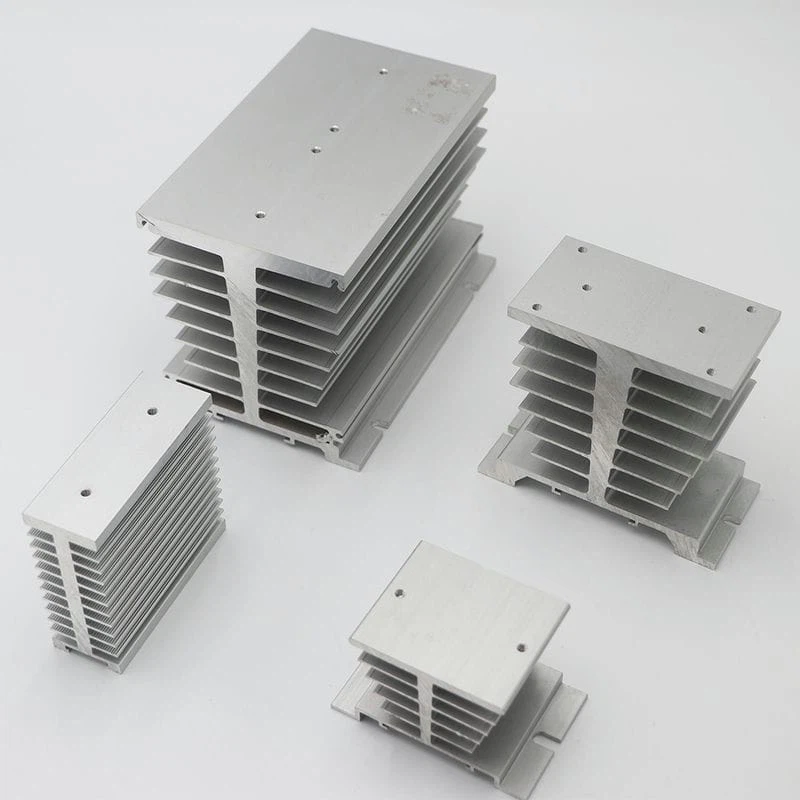
Electronics and Appliances:Used to manufacture heat sinks (for LED lighting and power modules), instrument enclosures, equipment cabinets, and guide rails, providing both thermal management and electromagnetic shielding capabilities.
Medical Equipment:Used to construct hospital bed frames, medical instrument carts, and diagnostic equipment stands, meeting requirements for non-magnetic properties, ease of cleaning, and structural stability.
Photovoltaics and New Energy:Utilized for solar panel frames, mounting systems, and structural components for energy storage battery modules, offering resistance to outdoor aging and lightweight characteristics.
Display and Logistics:Fabricated into display stands, shelving units, shopping carts, pallets, and access ladders, providing flexibility, durability, and a clean, professional appearance.
Aerospace and Defense:Used to manufacture aircraft seat rails, drone airframes, and lightweight radar mounts, meeting stringent requirements for high strength-to-weight ratios and tight tolerances.
Aluminum profiles serve as an indispensable structural material in modern industry and daily life.




Why choose us
Our Certificate
They meet the highest quality requirements as stipulated in ISO9001, ISO14000:14001 SGS guidelines and our stringent quality control system.
Production Equipment
We have precision CNC machining equipment: CNC lathes, milling machines, tapping machines, welding machines, etc.
Professional After Sales Service
We control the product quality critically for every step during the manufacturing . We offer technical support that is second to none.
Production Market
We have customers from both domestic market and oversea market. Our main sales market:Western Europe: 30%,North America 25%,Southern Europe 15%,Central Europe 15%,Russian 15%
Advantages of Aluminum Profile
Lightweight Yet Strong
Aluminium is significantly lighter than steel, yet it provides excellent strength and stability.
This makes aluminium profiles ideal for applications where weight reduction is crucial, such as aerospace, automotive, and industrial frameworks.
Corrosion Resistance
One of the standout features of aluminium is its natural resistance to rust and corrosion.
Unlike steel, which requires special coatings to prevent oxidation, aluminium forms a protective oxide layer that enhances its longevity, making it perfect for outdoor and high-humidity environments.
Modular and Versatile
Aluminium profiles can be easily connected using a variety of fittings and connectors, allowing for rapid assembly and reconfiguration.
Cost-Effective and Sustainable
Aluminium is not only abundant but also highly recyclable.
The ability to reuse and repurpose aluminium profiles reduces waste and promotes sustainability, making them a cost-effective and environmentally friendly solution.
Fabrication Techniques for Aluminum Profiles
Punching
It involves creating holes or cutouts in aluminium profiles using a punch and die set. The punch applies force to the material, causing it to deform and create the desired hole or shape. Punching is often used to create holes for fasteners and connectors or to accommodate wiring and cables.
Drilling
Drilling is a process that involves using a rotating drill bit to create holes in aluminium profiles. The drill bit cuts into the material, removing material as chips and creating a hole. Drilling is commonly used for precise hole placement and is suitable for various diameters and depths.
Tapping
Tapping is creating threads inside a drilled hole in aluminum profiles. A tap cuts grooves into the material, forming internal threads. This allows screws or bolts to be securely fastened into the profile. Tapping is often used in applications where fastening or assembly is required.
Versatile applications of aluminum profiles across industries
Construction And Architecture: In this sector, aluminum profiles are used for window frames, door frames, curtain wall systems, and structural facades. Their lightweight nature and resistance to corrosion make them ideal for modern architectural designs, enhancing both aesthetics and energy efficiency.
Automotive And Transportation: Aluminum profiles play a crucial role in reducing vehicle weight, thereby improving fuel efficiency and reducing emissions. They are used in chassis, body parts, railings, and frames within cars, trucks, trains, and even aerospace applications.
Solar Energy Systems: The renewable energy sector, particularly solar panel frames and mounting systems, benefits from the durability and corrosion resistance of aluminum profiles. They ensure long-term stability and performance of solar installations in various environmental conditions.
Electronics And Electrical: Due to aluminum's excellent thermal conductivity, profiles are used in heat sinks, enclosures, and frames for electronic devices ranging from consumer gadgets to large servers and cooling systems.
Furniture And Interior Design: In the realm of furniture and interior design, aluminum profiles offer both structural support and aesthetic appeal. They are used in modular kitchens, office partitions, shelving units, and decorative elements, providing a sleek, modern look.
Choose the best aluminium profile for your project
Consider the application
Will it be used for structural support, as a base for other elements, or will it be used as a decorative piece The application will determine the type of profile you need, such as an angle profile, channel or tube, depending on the loads and requirements.
Size and shape
It is important to select the right profile in terms of size and shape, as this will be decisive in ensuring that it fits correctly into the project design. The profile must be perfectly adapted to the dimensions of the space where it will be installed and meet the necessary structural requirements.
Strength and durability
This point is of particular importance if the profile will be used outdoors or in applications involving heavy loads. Make sure that the chosen aluminium profile has adequate strength to withstand the forces and conditions of the space in which it will be used.
Finishing
Anodised finishes offer increased corrosion resistance, while painted profiles offer a wider variety of colours and aesthetic finishes. Depending on the exposure to the environment, the choice of finish will also influence the longevity and maintenance of the profile.
FAQ
We're professional aluminum profile manufacturers and suppliers in China, specialized in providing high quality custom service. We warmly welcome you to wholesale cheap aluminum profile from our factory.
