

What are the surface treatments for extruded heat sinks?
Hey there! As a supplier of extruded heat sinks, I've seen firsthand how important surface treatments are for these nifty little devices. Extruded heat sinks are widely used in various industries to dissipate heat and keep electronic components cool. But did you know that the surface treatment of a heat sink can significantly affect its performance and durability? In this blog post, I'm gonna walk you through the different surface treatments for extruded heat sinks and why they matter.
Anodizing
One of the most popular surface treatments for extruded heat sinks is anodizing. Anodizing is an electrochemical process that creates a protective oxide layer on the surface of the aluminum heat sink. This oxide layer not only enhances the heat sink's corrosion resistance but also improves its aesthetic appearance.
There are two main types of anodizing: sulfuric acid anodizing and hard anodizing. Sulfuric acid anodizing is the most common type and is used for general-purpose applications. It creates a relatively thin oxide layer that is typically 5 to 25 microns thick. This type of anodizing is cost-effective and provides good corrosion resistance.
Hard anodizing, on the other hand, creates a thicker and harder oxide layer, usually 25 to 150 microns thick. It offers superior wear resistance and is ideal for applications where the heat sink will be exposed to harsh environments or abrasive materials. Hard anodizing also has better thermal conductivity than sulfuric acid anodizing, which can improve the heat sink's cooling performance.
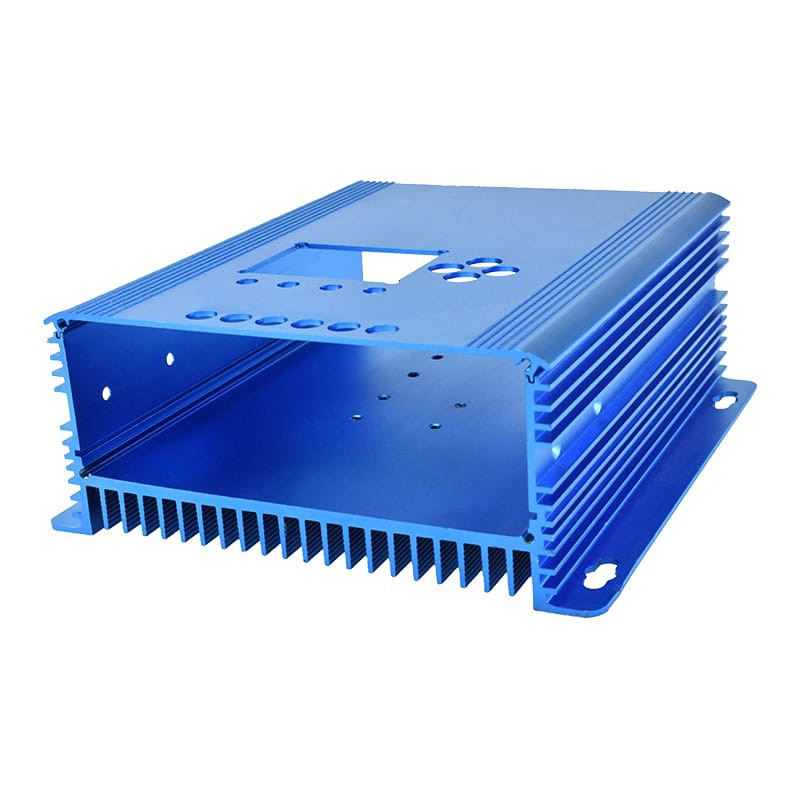
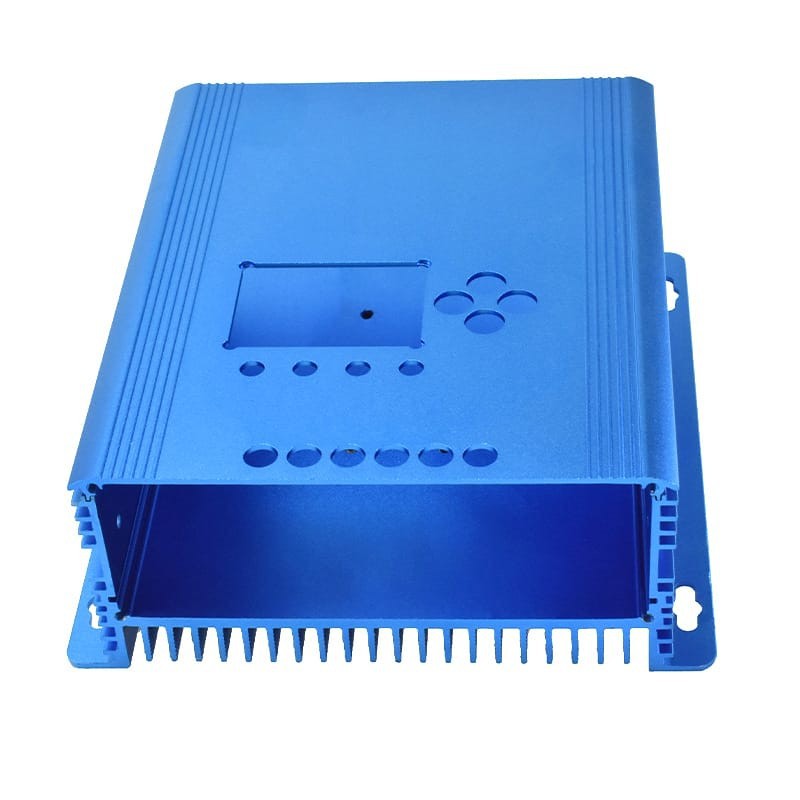
Anodizing can also be dyed to achieve different colors, allowing for customization of the heat sink's appearance. This is particularly useful for applications where the heat sink is visible and needs to match the overall design of the product.
Powder Coating
Powder coating is another popular surface treatment for extruded heat sinks. It involves applying a dry powder to the surface of the heat sink and then curing it in an oven. The powder melts and fuses to the surface, creating a durable and protective coating.
Powder coating offers several advantages over other surface treatments. It provides excellent corrosion resistance, even in harsh environments. It also has a high level of durability and can withstand scratches, chips, and abrasion. Additionally, powder coating can be used to achieve a wide range of colors and finishes, allowing for customization of the heat sink's appearance.
One of the key benefits of powder coating is its ability to improve the heat sink's thermal performance. The powder coating acts as an insulator, reducing the heat transfer coefficient between the heat sink and the surrounding environment. This can help to improve the heat sink's efficiency and reduce the temperature of the electronic components it is cooling.
Electroless Nickel Plating
Electroless nickel plating is a surface treatment that involves depositing a layer of nickel on the surface of the heat sink using a chemical process. This type of plating provides excellent corrosion resistance and wear resistance, making it ideal for applications where the heat sink will be exposed to harsh environments or abrasive materials.
Electroless nickel plating also has good thermal conductivity, which can improve the heat sink's cooling performance. It can be used to enhance the solderability of the heat sink, making it easier to attach it to other components.
One of the advantages of electroless nickel plating is its ability to provide a uniform coating thickness, even on complex shapes and geometries. This ensures that the heat sink's performance is consistent across its entire surface.
Chromate Conversion Coating
Chromate conversion coating is a surface treatment that involves applying a thin layer of chromate to the surface of the heat sink. This type of coating provides excellent corrosion resistance and can be used as a primer for other coatings, such as paint or powder coating.
Chromate conversion coating is typically used for applications where the heat sink will be exposed to mild to moderate environments. It is a cost-effective surface treatment that can provide good protection against corrosion.
However, it's important to note that chromate conversion coatings contain hexavalent chromium, which is a toxic substance. As a result, there are increasing regulations and restrictions on the use of chromate conversion coatings. Many manufacturers are now looking for alternative surface treatments that are more environmentally friendly.
Thermal Interface Materials (TIMs)
In addition to the surface treatments mentioned above, thermal interface materials (TIMs) are also an important consideration for extruded heat sinks. TIMs are used to fill the microscopic gaps between the heat sink and the electronic component, improving the thermal contact and reducing the thermal resistance.
There are several types of TIMs available, including thermal greases, thermal pads, and phase change materials. Thermal greases are the most common type of TIM and are typically made of a silicone or ceramic base. They have a high thermal conductivity and can provide excellent thermal performance.
Thermal pads are another type of TIM that are made of a soft, compressible material. They are easy to install and can provide good thermal performance. Phase change materials are a newer type of TIM that change from a solid to a liquid state at a specific temperature. They offer excellent thermal performance and can be used in high-power applications.
Why Surface Treatments Matter
So, why are surface treatments so important for extruded heat sinks? Well, there are several reasons. First and foremost, surface treatments can improve the heat sink's corrosion resistance, which is essential for ensuring its long-term durability. By protecting the heat sink from corrosion, surface treatments can help to prevent damage and extend its lifespan.
Surface treatments can also improve the heat sink's thermal performance. For example, anodizing and powder coating can reduce the heat transfer coefficient between the heat sink and the surrounding environment, improving the heat sink's efficiency. Electroless nickel plating and thermal interface materials can also enhance the heat sink's thermal conductivity, allowing it to dissipate heat more effectively.
In addition to improving performance and durability, surface treatments can also enhance the heat sink's aesthetic appearance. Anodizing, powder coating, and other surface treatments can be used to achieve a wide range of colors and finishes, allowing for customization of the heat sink's appearance to match the overall design of the product.
Conclusion
In conclusion, surface treatments play a crucial role in the performance and durability of extruded heat sinks. Whether you're looking for improved corrosion resistance, enhanced thermal performance, or a customized appearance, there are a variety of surface treatments available to meet your needs.
As a supplier of extruded heat sinks, I have the expertise and experience to help you choose the right surface treatment for your application. Whether you need anodizing, powder coating, electroless nickel plating, or another surface treatment, I can provide you with high-quality heat sinks that are tailored to your specific requirements.
If you're interested in learning more about our Extruded Aluminum Heatsink or Aluminium Heatsink Profile products, or if you have any questions about surface treatments for extruded heat sinks, please don't hesitate to reach out. We're here to help you find the best solution for your heat dissipation needs. And if you're looking for CNC Machined Heat Sinks, we've got you covered too.
Let's work together to ensure your electronic components stay cool and perform at their best. Contact us today to start the conversation!
References
- ASM Handbook, Volume 5: Surface Engineering
- Aluminum Anodizing Council
- Powder Coating Institute
- Nickel Development Institute